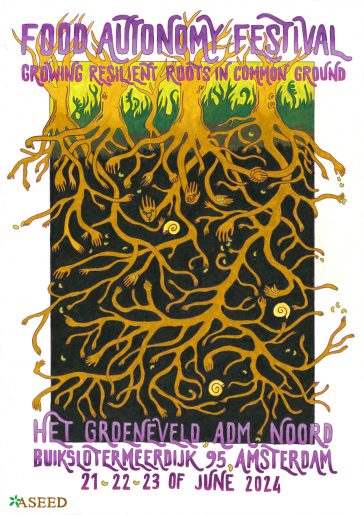
Food Autonomy Festival #8 (2024)
Food Autonomy Festival #8: Growing resilient roots in common ground. Let’s come together to build resilience in the food justice movement! The Food Autonomy Festival (FAF) is a three-day gathering organised by … verder lezen
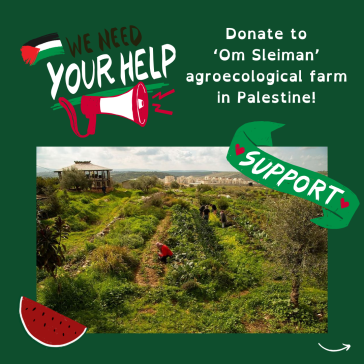
Support ‘Om Sleiman’ agroecological farm in Palestine!
While the Israeli army is murdering and starving thousands of Palestinians to death in Gaza, the situation in the West Bank has also been getting worse and worse since October 2023. Freedom … verder lezen

ESC positions available for the Fossil Free Agriculture campaign – Apply Now!
Do you have an affinity with activism, grass-roots organising, or campaigning on agriculture and food issues, as well as social justice? Are you concerned about climate change? Would you like to change … verder lezen
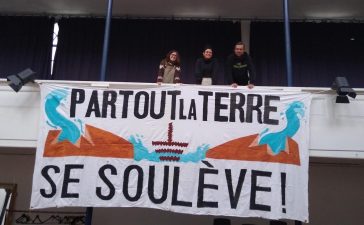
Les Soulevements de la Terre tour
Last month, we had the pleasure to host Les Soulevements de la Terre and Bassines non Merci in their tour across Central Europe. They were able to share their struggle, history, and … verder lezen
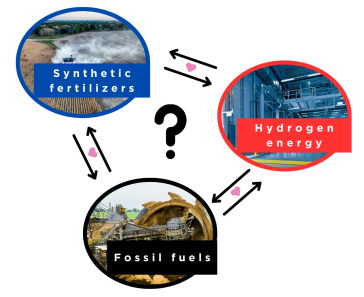
The connection between the Hydrogen energy hype, fertilizers and the fossil fuel industry
Why the synthetic fertilizer industry loves fossil fuels:Synthetic fertilizers producers rely on fossil fuels as their main input. Through multiple industrial processes fossil gas is converted to the fertilizer Ammonia (NH₃). As … verder lezen
Red Ons Groen – Save the Lutkemeerpolder!
Save our Green! The initiative Behoud Lutkemeer and Voedselpark Amsterdam have launched the campaign Red ons Groen. Together, we want to prevent that Proptimize BV, will build a 55,000 m2 (that is … verder lezen
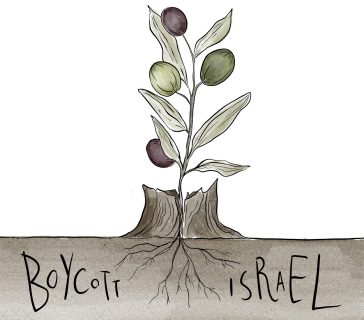
Colonial Occupation and Food Sovereignty in Palestine
Food is the first frontier! What is Food Sovereignty? The right of peoples to healthy and culturally appropriate food produced through ecologically sound and sustainable methods, and their right to define their … verder lezen

Israeli Agritech: An Invisible Player in The Israeli Settler Colonial Project
Israeli agricultural technology (agritech) is an invisible player in the Israeli illegal occupation of Palestine, and is implicated in the agricultural land grabbing in the occupied West Bank, Gaza Strip and Syrian … verder lezen
Internship vacancy by Mycelia van Hoop
Vacancy: Assistant Project Coordinator (Internship) – Boerengroep & Mycelia van Hoop Project Are you passionate about fostering sustainable change, connecting communities, and driving positive transformation in Dutch food systems? The Mycelia of … verder lezen
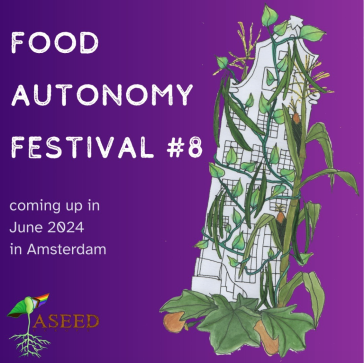
The Food Autonomy Festival #8 is on the horizon!
The eighth edition of the Food Autonomy Festival (FAF) Amsterdam is taking place this upcoming June. Let’s come together to build resilience within the food justice movement. Through workshops and discussions, we … verder lezen